Don't miss
Showing posts with label Plants. Show all posts

Sunday, 13 October 2013

Plant growth stage in Hydroponics Garden


A plant’s life cycle begins with germination, recognized by the above-ground appearance of a growing shoot. Mated to this shoot are two small, round leaves known as cotyledons (A). Once these leaves begin manufacturing food, the plant begins to grow and enters the seedling stage. During this time the plant develops it first set of true leaves, resembling those of a mature plant. The primary formation of a root system begins. The root development that takes place at this time is key to the rate at which the plant will continue to grow. Providing the proper environment for the roots will ensure that your crop will have a chance to flourish.Plant growth stage in Hydroponics Garden
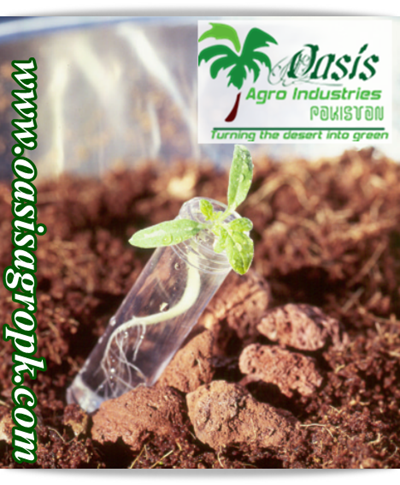
Once the root system can support further growth, the vegetative stage begins. Nutritional requirements at this time call for large amounts of nitrogen, required for the production of chlorophyll, as growth during this period is primarily stem, branch and leaf. The most substantial growth over the lifecycle of the plant occurs in the vegetative stage and will continue unless interrupted by a change in environment or lack of water/nutrients.
The final stage of the organisms lifecycle is the reproductive stage. Because the objective is now to reproduce, and thus carry on evolution, energies are directed to the manufacture of flowers, seeds, and fruit. The primary nutritional requirements begin to shift at this time from a high-N diet to a low N, high P-K diet. This is due to a considerable slow down in vegetative growth while reproduction takes place. This change prompts a switch in nutrient solutions from a vegetative formula to a flowering, or 'bloom' formula. Many hydroponic nutrients now come as a two part system for exactly this reason. In some plants, reproduction is triggered by a change in the length of daylight, this characteristic is called photoperiodism. It is this characteristic which governs when these plants may be sown and harvested if growing outdoors. Indoors, be sure to provide the proper photoperiod for your crop or they may never fully develop. Changing the length of artificial daylight can trick the plant into
flowering early. Commercial growers use this trick to deliver flowers to markets out of season and at a premium to vendors and customers alike.
If you are growing indoors, for lack of natural insects, you must play “bee” by pollinating the flowers on your plants manually. For tomatoes and peppers a delicate touch with a brush on each flower will help the plant pollinate itself to produce fruit. There are commercially available plant “shakers” that vibrate the flowering plants every so often to accomplish the same. I have found that the breeze from a strong circulating fan is usually sufficient to cause pollination indoors.

Friday, 19 July 2013

Why Do Plants Need Light?


Friday, July 19, 2013 Stephen E. Doyle
Plants are beneficial to humans and other animals in a myriad ways. The most commonly thought of benefit, that plants provide, is that they give off oxygen while takingWhy Do Plants Need Light? in carbon dioxide. They, namely trees, also provide shade and cooler temperatures.
Plants are also used in manufacturing products such as paper, lighting, adhesives, medicine, clothing, cosmetics, fuel, charcoal as well as many other products. Additionally, plants provide food for people everywhere. But without light, plants- and life as we know it-  would cease to exist. All plants and animals are fully dependent on photosynthesis for their energy. While some carnivores do not eat plants, directly, the vast majority consume animals that subsist on plants. But why exactly do plants need light? How does this miracle process work?
“Plants need light for photosynthesis. Photosynthesis is the process of the plant making its own food,” said Matt Kostelnick, senior horticulturalist, at Ambius. Photosynthesis occurs within the chlorophyll inside the chloroplasts. Chloroplasts are the sites of photosynthesis. This is a two-step process: the light reactions and then the Calvin cycle.
The photosystems involved in the light reactions are: the ‘water-splitting photosystem’ in which electrons are extracted from water and oxygen is released onto the atmosphere. The second photosystem that takes place is what is referred to as the NADPH Photosystem, in which electrons are moved from the chlorophyll to NADP-producing NADPH. Together the two photosystems release energy to the chloroplast, which then uses it to drive cellular processes crucial for plant survival.Why Do Plants Need Light?
Inside the thick double-membraned layer of the chloroplast is a thick fluid called stroma and inside is an apparatus of stacked green sacs known as ‘grana.’ This is where the chloroplast molecules capture light energy. The energy from the light is utilized to produce ATP (adenosine triphosphate) as well as NADPH.
ATP is the cellular molecule that supplies cells with the energy to do work. NADPH is an electron carrier used in the calvin cycle where it transforms carbon dioxide into high energy sugar which, in turn, is used by cells to make glucose and other needed organic molecules. Alas, memories of high school biology class come flooding in while attempting to accurately recall all that was taught.
Kostelnick went on to explain that, “Plant leaves function a lot like ‘solar-panels,’ instead of creating energy, they are creating food for the plant by harnessing light energy from the sun (or another light source).”  Kostelnick’s easy to understand interpretation clearly defines the importance of the process utilized by plants and other organisms to convert light energy mainly from the sun, into chemical energy that will be used to fuel the organisms’ life-defining activities.
What other ways do plants benefit us? Share below in the comments.
Source: Ambius